If you have been researching stevia, you have probably come across two versions: a fine white powder, and a coarser green one.
Chances are you have not seen the green sort on a shelf. It rarely appears in Australian shops — you are far more likely to have found it on an overseas website, a health forum or a wellness blog. That is part of why it carries a certain mystique: unfamiliar, greener, seemingly closer to the plant. It is easy to assume it must be the purer or more premium option.
It is not a premium version of the white. It is a genuinely different product, and the difference matters more than the colour suggests.
Here is the short version, then the detail.
The quick answer: White stevia is the purified sweetening compound extracted from the stevia leaf. Green stevia is the whole leaf, dried and ground. White stevia is what Australian food regulations permit as a sweetener, it is far sweeter, and it tastes cleaner. Green stevia is a whole-leaf herb with a strong liquorice note. For sweetening food and drinks, white is almost always the right choice.
What white stevia actually is
The stevia plant (Stevia rebaudiana) produces its sweetness through a family of compounds called steviol glycosides. The best known is Rebaudioside A, usually shortened to Reb A.
To make white stevia, the leaves are steeped in water, and that liquid is then filtered and purified to isolate the steviol glycosides. What is left is a white powder that is intensely sweet and carries almost none of the leaf's other flavours.
According to Food Standards Australia New Zealand, steviol glycosides are 150 to 300 times sweeter than sugar. Our own RebA97 extract is around 450 times. That is why a teaspoon of pure extract goes a very long way, and why most retail products blend it with a bulking agent so you can measure it with an ordinary spoon.
What green stevia actually is
Green stevia is the whole stevia leaf, dried and milled to a powder. Nothing is extracted and nothing is removed — which is exactly why it stays green.
Because the sweet compounds are still mixed in with everything else in the leaf, green stevia is much less sweet than white — roughly 10 to 40 times sugar rather than 150 to 300. It also carries the leaf's full flavour, which most people describe as grassy with a pronounced liquorice or herbal aftertaste.
The regulatory difference most guides miss
This is the part worth understanding before you buy, and it is specific to Australia.
FSANZ approves steviol glycosides as a food additive, listed as additive 960. The approved forms are produced by extraction and purification from the leaf, or by enzymatic or fermentation processes. On an ingredient list you will see it declared as "sweetener (960)" or "sweetener (steviol glycosides)".
Crucially, additive 960 carries a purity specification. FSANZ records the JECFA standard as requiring purity of "no less than 95% total steviol glycosides on the dried basis." Raw green leaf contains only a small fraction of that, so it cannot meet the specification.
Whole dried stevia leaf is therefore not the approved additive. It is a different product in regulatory terms — sold as a herb or a food rather than as a permitted sweetener for use in manufactured food.
For you as a home cook this is not a safety warning. It is a practical signal: the white extract is the form that has been assessed, standardised and permitted for sweetening, and it is the form with consistent, predictable sweetness batch to batch. Green leaf powder varies with growing conditions, harvest and milling.
Is green stevia more natural?
It is less processed — that part is true, and if minimal processing is what you value, green stevia delivers it.
But "less processed" and "better for you" are not the same claim, and we will not pretend otherwise. White stevia is made by steeping leaves in water and filtering the result. That is closer to how tea is made than to industrial synthesis. Both products come from the same plant.
The honest difference is one of purpose. Green stevia is a whole-leaf herb. White stevia is a sweetener. If you want to sweeten your coffee without changing its flavour, the purified extract does that job and the leaf powder does not.
Side by side
| White stevia (extract) | Green stevia (whole leaf) | |
|---|---|---|
| What it is | Purified steviol glycosides | Dried, ground stevia leaf |
| Sweetness vs sugar | 150–300× (FSANZ) | Roughly 10–40× |
| Taste | Clean and sweet; some bitterness at high doses | Grassy, strong liquorice note |
| Colour in food | None — stays invisible | Tints food green |
| Calories / carbs | Zero | Negligible at normal use |
| Consistency | Standardised, predictable | Varies by crop and batch |
| Australian status | Permitted sweetener, additive 960 | Sold as a herb, not the approved additive |
| Best for | Tea, coffee, baking, everyday sweetening | Herbal teas, whole-food cooking |
Which should you buy?
Choose white stevia if you want to sweeten drinks or bake with it, you want a clean taste that does not compete with your food, or you want the same result every time. This covers most people, most of the time.
Choose green stevia if minimal processing is your priority, you actively want the herbal flavour, or you are using it in a herbal tea where a liquorice note is welcome.
One practical note. Pure white extract is so concentrated that measuring it accurately by hand is genuinely difficult — an eighth of a teaspoon can sweeten a whole cake. That is why most people are better served by a stevia blend, where the extract is combined with erythritol so it can be measured with a normal spoon.
Our Stevia Blend is not a 1:1 sugar replacement. It is five times sweeter than sugar, so you use one fifth as much — about ⅕ cup, or 3 tablespoons, in place of 1 cup of sugar. If you want a straight spoon-for-spoon swap, our Monk Fruit Blend and xylitol both replace sugar 1:1. Full quantities are on our conversion chart.
What we stock
- Organic Stevia Extract Powder — pure Reb A extract, for when you want maximum concentration and no bulking agent. Available as Reb A 97% and Reb A 40%.
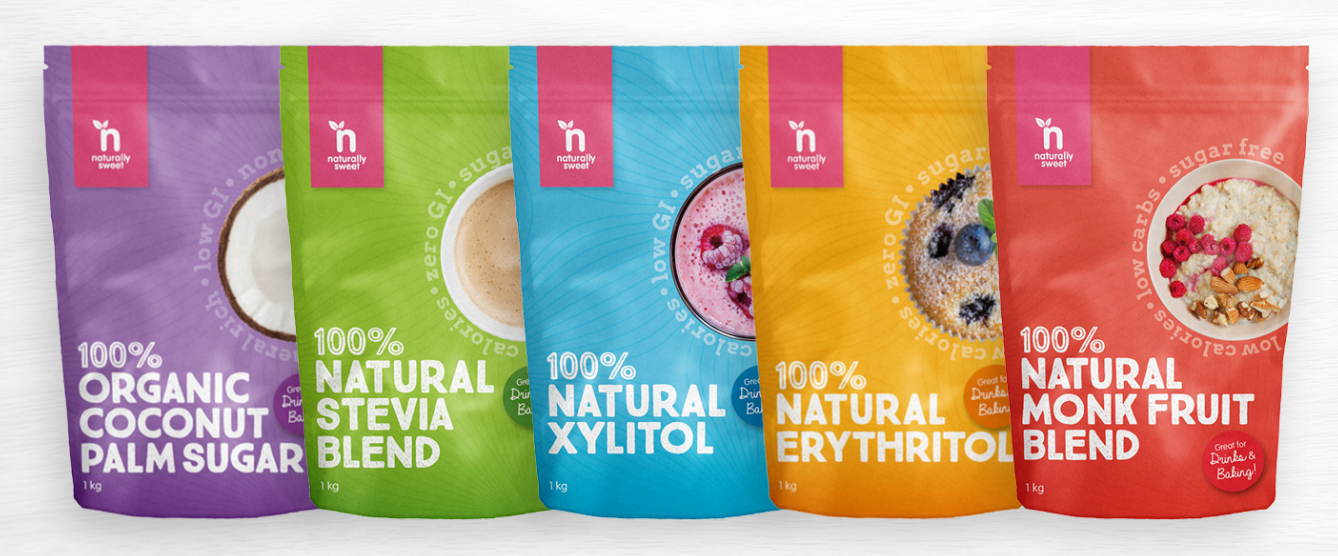
- Stevia Blend Retail Packs — extract blended with erythritol, five times sweeter than sugar. In 500g, 1kg and 2.5kg pouches.
- Bulk Stevia Blend — 25kg for commercial kitchens and food manufacturers.
- Liquid Stevia Drops — for drinks, where a couple of drops is easier than weighing powder.
Not sure how much to use? Our stevia conversion chart gives exact substitution ratios for every product we sell. If you are choosing a sweetener with diabetes in mind, our guide to sweeteners and diabetes in Australia sets out what Diabetes Australia, FSANZ and the WHO actually say.
Frequently asked questions
Is white stevia artificial?
No. White stevia is extracted from the leaves of the stevia plant by steeping them in water and then filtering and purifying the liquid. It is a purified plant extract, not a synthetic compound. Artificial sweeteners such as aspartame and saccharin are manufactured chemically and have no plant origin — stevia is a different category entirely.
Why is green stevia less sweet than white stevia?
Because the sweet compounds are still diluted by the rest of the leaf. Whole-leaf green stevia is roughly 10 to 40 times sweeter than sugar, while purified extract is 150 to 300 times sweeter according to Food Standards Australia New Zealand. Extraction concentrates the sweetness by removing the plant material around it.
How much stevia replaces a cup of sugar?
It depends on the form. Our Stevia Blend is five times sweeter than sugar, so about ⅕ cup or 3 tablespoons replaces 1 cup of sugar. Pure RebA97 extract needs only about ⅛ of a teaspoon. Our conversion chart has the full range.
Does stevia have calories or carbohydrates?
Purified stevia extract contains no calories and no carbohydrates, and it does not raise blood glucose. Green leaf powder contains a negligible amount at the quantities normally used. If you are counting carbohydrates precisely, check the nutrition panel on the specific product, since blends containing erythritol are labelled differently from pure extract. There is more detail in our guide to sweeteners and diabetes.
Is stevia approved for use in Australia?
Yes. Steviol glycosides are approved by Food Standards Australia New Zealand as food additive 960. FSANZ permits forms produced by extraction and purification from the stevia leaf, and by enzymatic and fermentation processes, subject to a purity specification of no less than 95% total steviol glycosides on the dried basis. On an ingredient list it appears as "sweetener (960)" or "sweetener (steviol glycosides)".
Can I bake with stevia?
Yes, stevia is heat stable and will not break down at normal baking temperatures. The practical difficulty is bulk: sugar provides structure, moisture and browning as well as sweetness, and a tiny quantity of pure extract cannot replace a cup of sugar physically. For baking, use a blend, and add erythritol or xylitol if you need to make up the volume.
Why does stevia sometimes taste bitter?
Usually because too much has been used. Steviol glycosides taste clean at low concentrations but can turn bitter or liquorice-like above a certain threshold, and that threshold varies between people. If your drink tastes bitter, try using less rather than more. Purity grade matters too — a higher Reb A percentage generally tastes cleaner.
Which stevia is best for coffee and tea?
White stevia, either as liquid drops or a blend. It dissolves without residue and does not add colour or herbal flavour to the drink. Green stevia will tint a cup of tea and add a liquorice note that competes with the tea itself.
The bottom line
White and green stevia are not two grades of the same product — they are two different things made from the same plant. White stevia is the purified sweetener, and it is the form Australian food regulations recognise as a sweetener. Green stevia is a whole-leaf herb with its own flavour and its own uses.
For sweetening, white wins on taste, strength and consistency. If you want it to behave like sugar in the kitchen, buy a blend rather than pure extract — and check the conversion ratio on the pack before you start.
Still deciding? Contact our team — we have been Australia's natural sweetener specialists since 2003 and we are happy to talk it through.
Researched and drafted with AI assistance. Reviewed, fact-checked and authorised by Lee Munro, Naturally Sweet Products.