
Strawberry jam is one of the harder things to make without sugar, and most sugar-free recipes online quietly skip the reason why.
Sugar is not just the sweetener in a traditional jam. It is the setting agent and the preservative. It draws water out of the fruit, reacts with the natural pectin to form a gel, and lowers the water activity enough that the jar keeps in the pantry for a year. Take the sugar out and all three of those jobs go unfilled.
This recipe fills them a different way. It sets with chia seeds rather than sugar, it uses xylitol rather than erythritol for a specific reason, and it is a fridge jam — not a shelf-stable preserve. That last point is the one most recipes get wrong.
Before you start — three things that matter
1. Use xylitol, not erythritol. This is the single most important choice in the recipe. Erythritol recrystallises as it cools, and in a wet, cold, long-stored product like jam that means visible crystals and a gritty mouthfeel within a day or two in the fridge. Xylitol stays dissolved. If erythritol is all you have, a stevia or monk fruit blend used in a smaller quantity will do less damage than straight granulated erythritol, but xylitol is the right tool here.
2. This jam must live in the fridge. Without sugar there is nothing preserving it. It is not shelf stable, water-bath processing will not make it shelf stable, and it should not be treated like your grandmother's jam. Fridge life is about two to three weeks. It freezes well for around three months.
3. Do not cook it as long as a sugar jam. Traditional jam is boiled hard to reach setting point. There is no setting point here because there is no sugar-pectin gel to reach. Overcooking just destroys the fresh strawberry flavour, which is the whole reason to make it yourself.
Xylitol and dogs. Xylitol is severely toxic to dogs even in very small amounts. A jar of this jam left within reach, or toast crusts fed to the dog, is a genuine emergency. If you have a dog in the house, label the jar and keep it on a high shelf in the fridge.
Ingredients
- 500g fresh strawberries, hulled and roughly chopped (about 3 punnets)
- ⅓ cup xylitol, or to taste
- 2 tablespoons chia seeds
- 1 tablespoon lemon juice, freshly squeezed
- 1 teaspoon vanilla extract (optional)
- Pinch of salt
Prep 10 minutes · Cook 15 minutes · Makes about 1½ cups
Frozen strawberries work and are often better value out of season. Do not thaw them first — add them straight to the pan and allow an extra five minutes of cooking, and use a little less lemon juice, since frozen berries release more liquid.
Method
- Put the strawberries, xylitol and salt in a medium saucepan over medium heat. Stir until the xylitol dissolves and the berries begin to release their juice, about 3 to 4 minutes.
- Bring to a gentle simmer. Mash the fruit against the side of the pan with a fork or potato masher — as smooth or as chunky as you like it.
- Simmer for 10 to 12 minutes, stirring often. It catches easily near the end. The mixture should reduce and thicken noticeably but will still look loose. This is correct.
- Take it off the heat. Stir in the lemon juice, the vanilla if using, and the chia seeds.
- Leave to stand for 10 minutes, then stir again. The chia will have started to swell.
- Taste now and adjust. Strawberry sweetness varies enormously between punnets and seasons, so add more xylitol a teaspoon at a time if it needs it.
- Spoon into a clean jar and refrigerate for at least 4 hours, or overnight. It will thicken substantially as it chills — do not judge the set while it is warm and do not be tempted to add more chia.
Variations
Smoother jam. Blitz the cooked fruit with a stick blender before adding the chia. You will still see the chia seeds; if you want them invisible, use 1 tablespoon of ground chia instead of 2 tablespoons of whole.
Without chia. Use 1 teaspoon of powdered gelatine bloomed in a tablespoon of cold water, stirred in off the heat. The set is firmer and more traditional. This version is not vegetarian.
Strawberry and rhubarb. Replace 150g of the strawberries with chopped rhubarb and add it at the start. Rhubarb is more acidic, so you will want a little extra xylitol and can drop the lemon juice.
Other berries. Raspberries and blackberries work with no changes. They break down faster, so start checking at 8 minutes. Blueberries need their skins broken — press them against the pan as they soften.
Using a stevia or monk fruit blend. Use about ¼ cup of monk fruit blend, which replaces sugar 1:1. If you are using our stevia blend, use only about 1 teaspoon — it is five times sweeter than sugar. Both are erythritol-based, so expect some crystallisation over a few days in the fridge. Make a smaller batch and eat it sooner.
Storage and safety
This is worth being clear about, because sugar-free jam is genuinely different from the jam most people grew up with.
- Refrigerate immediately once cool. Do not leave it on the bench.
- Two to three weeks in the fridge in a clean sealed jar. Use a clean spoon every time — crumbs and butter introduced from a knife will shorten it considerably.
- Three months in the freezer. Freeze in small portions and leave headspace in the container.
- Do not water-bath process it for the pantry. The safety of traditional canned jam relies on high sugar content and acidity together. Without the sugar, that method does not apply.
- Discard it if you see mould, if the smell changes, or if it starts to bubble or ferment.
Recipe notes
Why chia works. Chia seeds absorb many times their weight in liquid and form a gel around themselves. That gel does mechanically what the sugar-pectin network does chemically in a traditional jam. It is not the same texture — it is a little softer and looser — but it holds on toast.
Why lemon juice. Acidity brightens the strawberry flavour, which flattens out without sugar to carry it. It is doing a flavour job here, not a setting one.
If it is too thin after a night in the fridge, stir in another teaspoon of chia and give it another few hours. Adding more at the start rather than at the end is the common mistake — chia keeps absorbing for hours and it is easy to overshoot into a solid.
Per tablespoon (approximate): 15 kcal · 1.8g carbohydrate · 0.4g protein · 0.4g fat, excluding xylitol. Figures vary with the sweetness of your fruit.
What to use
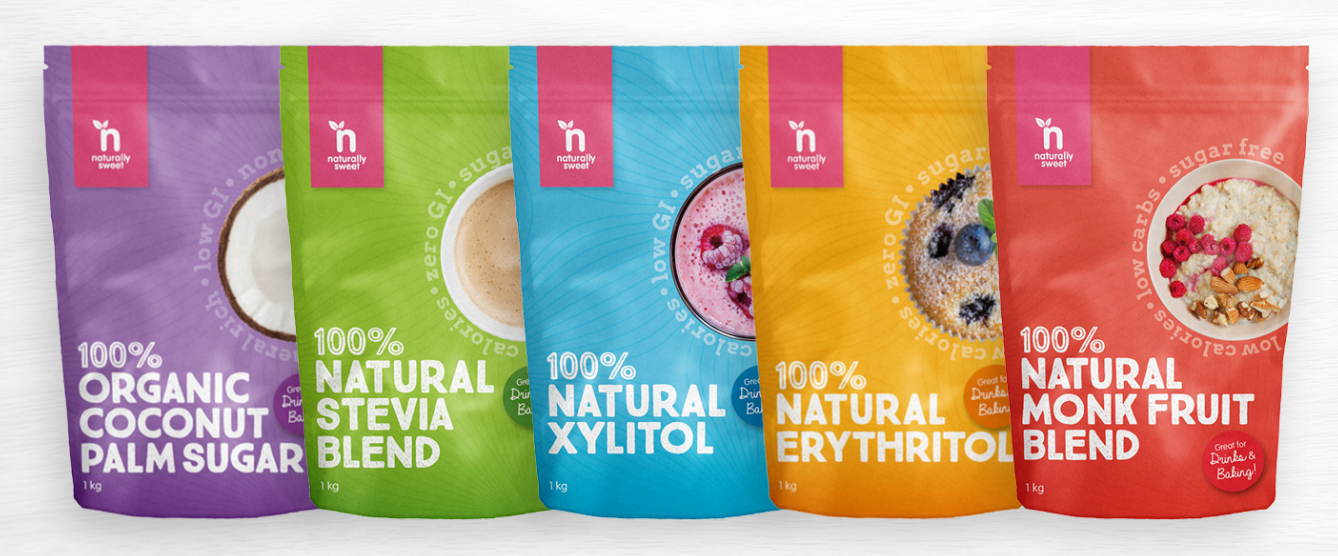
- Xylitol — our pick for jams, syrups and sauces. It stays dissolved when cold, and it replaces sugar 1:1.
- Monk Fruit Blend — also a 1:1 sugar replacement, with no bitterness.
- Stevia Blend — five times sweeter than sugar, so use one fifth as much.
Not sure how much to use? Our conversion chart has the exact ratios. If you are choosing between sweeteners more generally, our guide to keto sweeteners in Australia covers which one suits which job.
Researched and drafted with AI assistance. Reviewed, fact-checked and authorised by Lee Munro, Naturally Sweet Products.