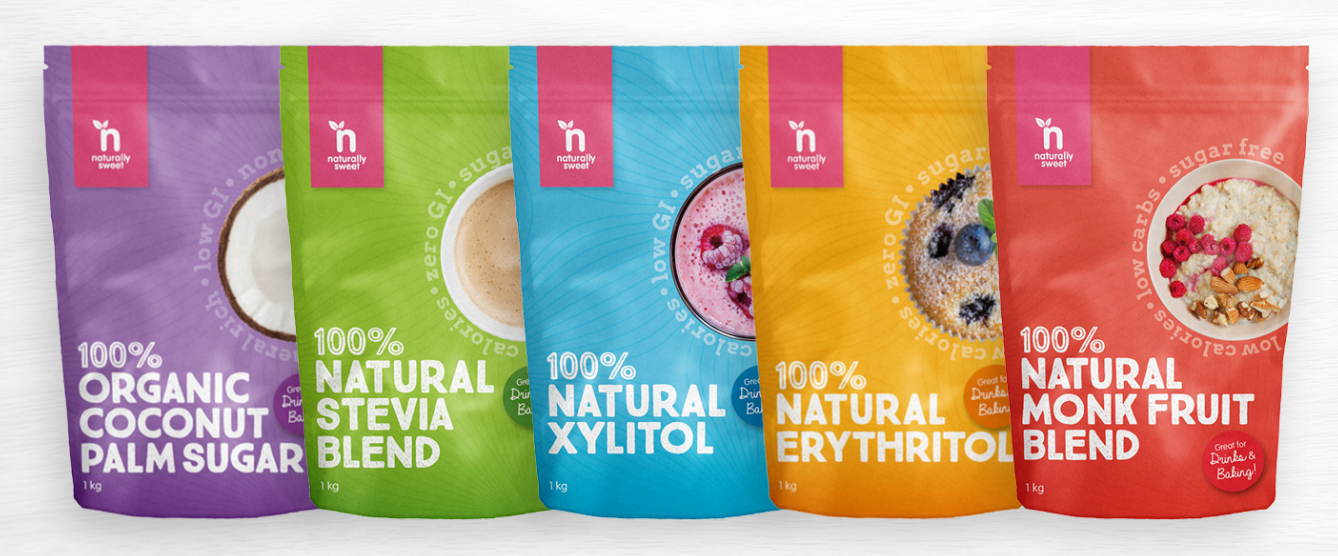

If you've been exploring natural sweeteners for a keto diet, managing blood sugar, or simply cutting back on refined sugar, you've almost certainly come across monk fruit extract. And for good reason — it delivers real sweetness with zero calories, zero sugar, and a glycemic index of zero, all from a small fruit that's been used in traditional Chinese medicine for centuries.
At Naturally Sweet Products, we've been supplying Australians with natural sugar alternatives since 2003. In this guide, we break down everything you need to know about monk fruit extract: what it is, how it compares to other sweeteners, its health benefits, and exactly how to use it in your kitchen.
Browse our monk fruit sweetener range
What Is Monk Fruit Extract?
Monk fruit extract is a natural, zero-calorie sweetener derived from Siraitia grosvenorii, a small green melon native to southern China and northern Thailand. The fruit is commonly known as luo han guo (罗汉果) — named after the Buddhist monks (luo han) who first cultivated it in the 13th century.
Unlike stevia, which gets its sweetness from glycosides extracted from a leaf, monk fruit's sweetness comes from a group of antioxidant compounds called mogrosides — primarily mogroside V. These compounds make monk fruit extract approximately 150 to 250 times sweeter than table sugar, meaning you need only a tiny amount to achieve the same sweetness.
The extract is made by crushing the fresh fruit, infusing it with hot water, and filtering the juice to concentrate the mogrosides. The resulting powder is then dried and standardised to a specific mogroside content — typically between 25% and 50% mogroside V for retail products.
Key facts: Monk fruit extract (luo han guo extract) is a natural sweetener containing zero calories, zero carbohydrates, and has a glycemic index of zero. It is approved as safe by the US FDA (GRAS status) and is permitted under Food Standards Australia New Zealand (FSANZ).
How Does Monk Fruit Extract Compare to Other Sweeteners?
One of the most common questions Australians ask when researching natural sweeteners is how monk fruit stacks up against the alternatives. Here's the definitive comparison:
| Sweetener | Calories (per tsp) | Glycemic Index | Sweetness vs Sugar | Keto-Friendly | Baking-Stable | Aftertaste |
|---|---|---|---|---|---|---|
| Monk Fruit Extract | 0 | 0 | 150–250× sweeter | ✅ Yes | ✅ Yes | Minimal |
| Stevia | 0 | 0 | 200–400× sweeter | ✅ Yes | ✅ Yes | Slight bitterness |
| Erythritol | ~0.2 | 0 | 70% as sweet | ✅ Yes | ✅ Yes | Cooling effect |
| Xylitol | 10 | 7–13 | 1:1 with sugar | ⚠️ Low-carb only | ✅ Yes | None |
| Coconut Sugar | 15 | 35 | Similar to sugar | ❌ No | ✅ Yes | Caramel notes |
| Table Sugar | 16 | 65 | Baseline | ❌ No | ✅ Yes | None |
The key distinction between monk fruit and stevia is the aftertaste. Many people find stevia has a slight bitter or liquorice-like aftertaste, particularly at higher concentrations. Monk fruit extract is widely regarded as having a cleaner, more neutral sweetness that closely mimics the taste profile of sugar — which makes it especially popular in coffee, baking, and desserts.
Monk fruit vs erythritol is a different question. Erythritol is a sugar alcohol with a mild cooling sensation and roughly 70% of sugar's sweetness. Many commercial monk fruit products — including our Naturally Sweet Monk Fruit Blend — combine monk fruit extract with erythritol to achieve a 1:1 sugar replacement ratio. This blend gives you the best of both: monk fruit's clean sweetness and erythritol's familiar bulk and texture.
The Health Benefits of Monk Fruit Extract
Zero Calories and Zero Glycemic Impact
Because the body does not metabolise mogrosides as sugar, monk fruit extract contributes no calories and does not raise blood glucose or insulin levels. This makes it one of the few sweeteners that is genuinely appropriate for:
- People managing type 2 diabetes or insulin resistance
- Those following a ketogenic diet (strict carbohydrate restriction)
- Anyone working to reduce calorie intake without giving up sweet flavours
- People with fructose intolerance, as monk fruit extract contains no fructose
Dental Safety
Like stevia and xylitol, monk fruit extract does not feed the oral bacteria (Streptococcus mutans) responsible for tooth decay. It is non-cariogenic, making it a safe choice for dental health — another advantage over regular sugar.
See our xylitol dental health range
How to Use Monk Fruit Extract in Cooking and Baking
Substitution Ratios
Because monk fruit extract is far sweeter than sugar, you use significantly less of it. The exact substitution depends on the product form:
- Pure monk fruit extract powder (high concentration): Use approximately 1/8 to 1/4 teaspoon to replace 1 cup of sugar
- Monk fruit blend with erythritol (1:1 ratio): Substitute cup-for-cup with sugar — ideal for most recipes
Baking tip: Monk fruit extract is heat-stable and performs well at temperatures used in baking, making it a reliable sugar substitute for cakes, biscuits, muffins, and slices. Unlike some sweeteners, it does not break down or turn bitter under heat.
Best Uses for Monk Fruit Sweetener
Monk fruit extract works well in virtually any application where you would normally use sugar:
- Hot beverages: Coffee, tea, chai — dissolves quickly with no residue
- Cold drinks: Smoothies, iced tea, lemonade, protein shakes
- Baking: Cakes, muffins, slices, biscuits — use a 1:1 blend for best results
- Sauces and dressings: Stir-fries, marinades, salad dressings
- Desserts: Mousse, ice cream, panna cotta, chia puddings
One Thing to Know About Baking Texture
Sugar plays a structural role in baking beyond sweetness — it contributes to browning (Maillard reaction), moisture retention, and spread in biscuits. Pure monk fruit extract, like most zero-calorie sweeteners, does not replicate these functions on its own. For best baking results, use a monk fruit and erythritol blend, which provides the bulk and texture closer to sugar.
Is Monk Fruit Extract Safe?
Yes. Monk fruit extract has an excellent safety profile and is approved by regulatory authorities in multiple countries:
- United States: FDA granted GRAS (Generally Recognised As Safe) status
- Australia & New Zealand: Permitted under Food Standards Australia New Zealand (FSANZ) as a food additive (INS 968 applies to related sweeteners; luo han guo extract is permitted as a food)
- China: Approved for use since 1996
- European Union: Approval process ongoing as of 2026
No significant adverse effects have been reported in healthy adults at typical dietary doses. Because it is not a sugar alcohol, monk fruit extract does not cause the digestive discomfort (bloating, laxative effect) that higher doses of xylitol or maltitol can produce. People with known allergies to gourd-family plants (melons, cucumbers, pumpkins) should exercise caution, as cross-reactivity is theoretically possible.
FAQ
What is monk fruit extract made from?
Monk fruit extract is made from the dried fruit of Siraitia grosvenorii, a small melon native to southern China. The fruit is crushed and steeped in hot water, and the resulting liquid is filtered and concentrated to isolate the sweetening compounds called mogrosides. The extract is then dried into a powder. The fruit itself is not exported for direct consumption — only the extract is used commercially.
Is monk fruit extract safe for people with diabetes?
Yes. Monk fruit extract has a glycemic index of zero — it does not raise blood glucose or stimulate an insulin response. It is widely recommended by dietitians as a suitable sweetener for people managing type 2 diabetes or following a low-GI diet. As with any dietary change, individuals with diabetes should consult their healthcare provider.
Can I use monk fruit extract in baking?
Yes. Monk fruit extract is heat-stable and will not break down or turn bitter during baking. For best results in recipes, use a monk fruit and erythritol blend (sold as a 1:1 sugar replacement) rather than pure extract, which is highly concentrated and requires careful measuring. The blend provides both sweetness and the bulk/texture that recipes need.
What is the difference between monk fruit and stevia?
Both are natural, zero-calorie sweeteners with a zero glycemic index. The main differences are: (1) Aftertaste — stevia can have a bitter or liquorice-like aftertaste at higher concentrations; monk fruit extract has a cleaner, more neutral sweetness. (2) Source — stevia comes from the Stevia rebaudiana leaf; monk fruit comes from the Siraitia grosvenorii fruit. (3) Sweetness intensity — stevia is generally 200–400× sweeter than sugar; monk fruit is 150–250× sweeter. Many people who find stevia too bitter prefer monk fruit.
How much monk fruit extract replaces one cup of sugar?
If using pure monk fruit extract powder (high concentration), approximately 1/8 to 1/4 teaspoon replaces one cup of sugar. If using a monk fruit and erythritol blend, substitute 1:1 — one cup of blend for one cup of sugar. Always check the product label, as mogroside concentration varies between products.
Does monk fruit extract cause digestive issues?
Pure monk fruit extract does not cause the digestive side effects associated with sugar alcohols. However, many commercial monk fruit products are blended with erythritol, which in very large amounts can cause mild bloating in sensitive individuals. At typical serving sizes, this is not an issue for most people.
Is monk fruit extract available in Australia?
Yes. Monk fruit extract is widely available in Australia through specialty health food retailers and online stores. Naturally Sweet Products has stocked monk fruit sweetener since it became available in the Australian market, offering retail packs from 100g to 1kg bulk options for commercial use.
The Bottom Line
Monk fruit extract is one of the most versatile and well-tolerated natural sweeteners available today. With zero calories, a zero glycemic index, genuine antioxidant activity, and a clean flavour profile free from bitter aftertaste, it earns its place at the top of the natural sweetener conversation — whether you're managing diabetes, following a keto diet, or simply making smarter choices about what you put in your body.
At Naturally Sweet Products, we offer monk fruit sweetener in multiple formats — from convenient retail pouches to bulk commercial quantities — so you can find exactly what your kitchen (or business) needs.
Shop our Monk Fruit Sweetener range →
Questions about which sweetener is right for you? Contact our team — we've been Australia's natural sweetener specialists since 2003.